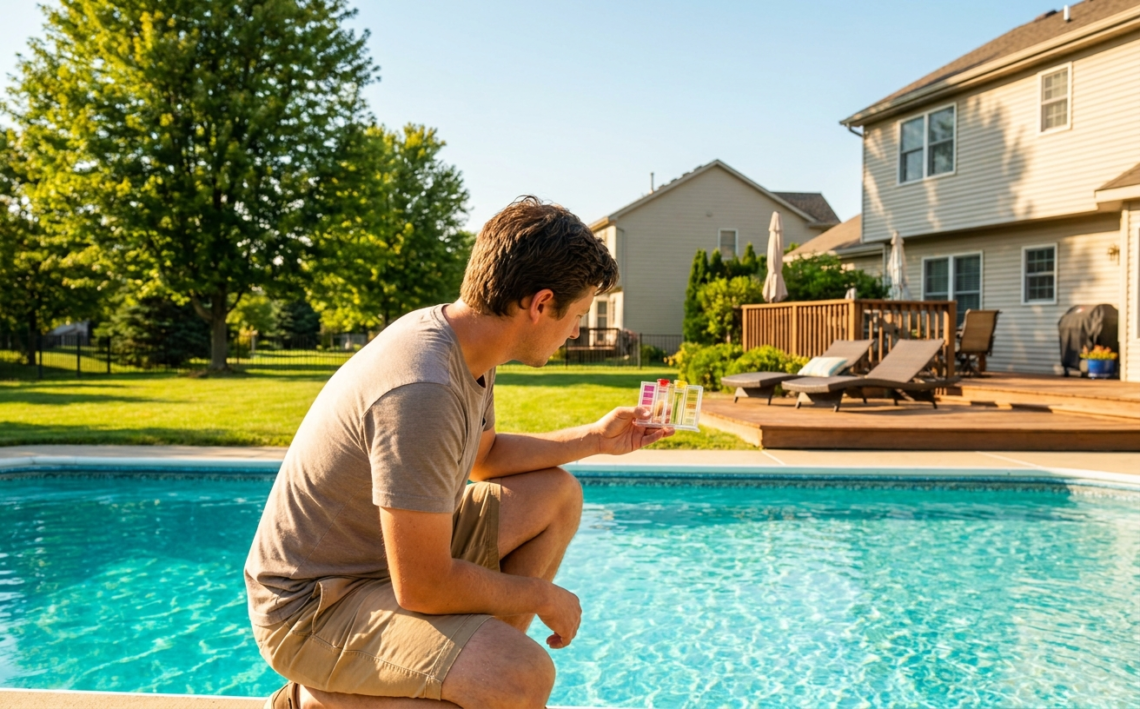
You add a pH increaser on Monday. The reading looks perfect by Tuesday. By Wednesday, it had dropped right back to where it started. Sound familiar?
This is one of the most frustrating cycles in pool ownership. You feel like you are doing everything right, but the water chemistry simply will not hold. The pH keeps sliding down, and no amount of adjustment seems to make it stick.
The problem is almost never the pH product you are using. It is something deeper that most pool owners overlook entirely: your total alkalinity is too low to support a stable pH.
The Difference Between pH and Alkalinity
pH measures how acidic or basic your water is right now. Total alkalinity measures how much resistance your water has to pH changes. They are related, but they serve completely different roles.
Think of alkalinity as the anchor and pH as the boat. If the anchor is too light, the boat drifts with every wave. If the anchor is heavy enough, the boat stays put even in rough water.
When alkalinity is low, your pH has no buffer. Rain, swimmer waste, and even the chlorine you add will push pH around freely. You are essentially chasing a moving target every time you test.
The Ideal Alkalinity Range
Most pool professionals recommend keeping total alkalinity between 80 and 120 ppm. Below 80, pH becomes unstable. Above 120, pH becomes difficult to change at all, and you may notice cloudy water or scaling on surfaces.
What Low Alkalinity Looks Like in Practice
Low alkalinity does not just cause pH drift. It creates a cascade of secondary problems that can make your pool miserable to maintain.
- pH swings wildly after rain or heavy swimming
- Chlorine becomes less effective at killing bacteria
- Pool surfaces may etch or corrode over time
- Metal fixtures develop staining from acidic water
- Eyes and skin irritation increases for swimmers
If you are dealing with two or more of these symptoms at the same time, low alkalinity is very likely the common thread connecting them all.
How to Raise Alkalinity the Right Way
Sodium bicarbonate is the standard chemical for raising total alkalinity. It is affordable, widely available, and gentle enough that it will not cause a sudden pH spike the way sodium carbonate can.
For a detailed walkthrough of dosing and application, this pool alkalinity guide covers everything from calculating how much to add based on your pool volume, to testing intervals and common mistakes to avoid.
The general process is straightforward, but precision matters. Here are the steps to follow.
- Test your current total alkalinity with a reliable kit or test strip
- Calculate the exact amount of sodium bicarbonate needed for your pool volume and target increase
- Dissolve the powder in a bucket of pool water before pouring it into the deep end with the pump running
- Wait at least four to six hours, then retest before adding any more
Never add more than two pounds of sodium bicarbonate per 10,000 gallons in a single treatment. It is much safer to raise alkalinity gradually over two days than to overshoot and deal with the opposite problem.
Why pH Always Needs Attention Second
One of the biggest mistakes pool owners make is trying to fix pH before fixing alkalinity. It feels logical to address the number that looks wrong on the test strip, but it is backwards.
Alkalinity must be adjusted first because it sets the foundation. Once your alkalinity is stable in the 80 to 120 ppm range, pH adjustment becomes much easier and the results actually last.
If you raise pH while alkalinity is still low, the pH will drift back down within days. But if you raise alkalinity first and then fine-tune pH, the entire chemistry profile holds steady for weeks.
A Simple Maintenance Order
- Always test and adjust alkalinity before pH
- Wait at least four hours between alkalinity and pH adjustments
- Recheck both levels after each round of changes
Keeping It Stable Through the Season
Once your alkalinity is in the right range, maintaining it is not difficult. But it does require consistent testing. Heavy rain, lots of swimmers, and regular chlorine use will all slowly pull alkalinity down over time.
Test alkalinity at least once every two weeks during the swimming season. If your pool gets heavy use or frequent rain, weekly testing is safer. Catching a small drop early is far easier than correcting a major one later.
Keep a small container of sodium bicarbonate on hand so you can make minor adjustments without a special trip to the store. Small corrections of ten or twenty ppm are easy and fast. Large corrections take more time and careful measurement.
If you use trichlor tablets as your primary chlorine source, pay extra attention to alkalinity. Trichlor is acidic and will gradually lower both pH and alkalinity over the course of a season. Regular testing becomes even more important.
A pool with stable alkalinity is a pool that practically maintains itself. pH stays where you set it. Chlorine works the way it should. The water looks clear and feels comfortable. Once you experience the difference, you will never go back to chasing pH alone.